Small defects high on a building rarely stay small. A failed sealant joint lets water into the wall, a loose cladding fixing works itself free, and a blocked gutter overflows into the brickwork every time it rains. Regular building maintenance at height catches these problems while they are still cheap to fix. This checklist sets out what London property managers should look at, and how rope access makes it practical to look at all of it.
Why planned maintenance pays
Reactive repairs almost always cost more than planned ones. Damage spreads, access has to be arranged in a hurry, and tenants are disrupted at short notice. A planned programme, based on a regular condition inspection, lets you budget ahead, group several jobs into one visit and deal with wear before it turns into damage.
The facade maintenance checklist
Windows and glazing
- Cracked, misted or failed glass units
- Perished gaskets and sealant around frames
- Loose or damaged window furniture and opening restrictors
- Build-up of dirt that hides defects and shortens the life of the frames
Rope access technicians can replace and repair glass and clean windows on high-rise buildings without scaffolding.
Sealant and movement joints
- Cracked, shrunken or detached mastic
- Gaps where cladding panels or precast units meet
- Signs of water getting in, such as staining below joints
Cladding
- Loose, missing or damaged panels and fixings
- Corrosion on brackets and support rails
- Damaged flashings and trims
See our cladding services for inspection, repair and installation at height.
Brickwork, stone and render
- Eroded or missing mortar joints
- Spalled bricks and cracked stone
- Cracked or hollow render
- Vegetation growing from joints and ledges
Masonry repairs by rope access deal with these defects on old and new buildings alike.
Gutters, downpipes and drainage
- Blocked or leaking gutters and hoppers
- Cracked or loose downpipes
- Ponding on flat roofs and in light wells
Balconies, steelwork and fixtures
- Corroded balustrades, brackets and structural steelwork
- Failed coatings that need protective painting
- Loose signage, lighting and cables fixed to the facade
Birds and pests
- Nesting on ledges, in light wells and behind pipework
- Guano on ledges, sills and walkways
Discreet, humane bird proofing can be fitted by rope access at any height.
Paintwork and finishes
- Peeling, faded or chalking paint
- Dirt and staining that a high-pressure clean would remove
A fresh coat of exterior paint protects the surface as well as improving its appearance.
How often should a building be checked?
Every building is different, but a sensible starting point is a visual inspection at least once a year. Check more often for tall or exposed buildings, older facades and anything with a history of leaks. Arrange an extra check after severe storms. Gutters and drainage often need attention every autumn, once the leaves have fallen.
Why rope access suits maintenance work
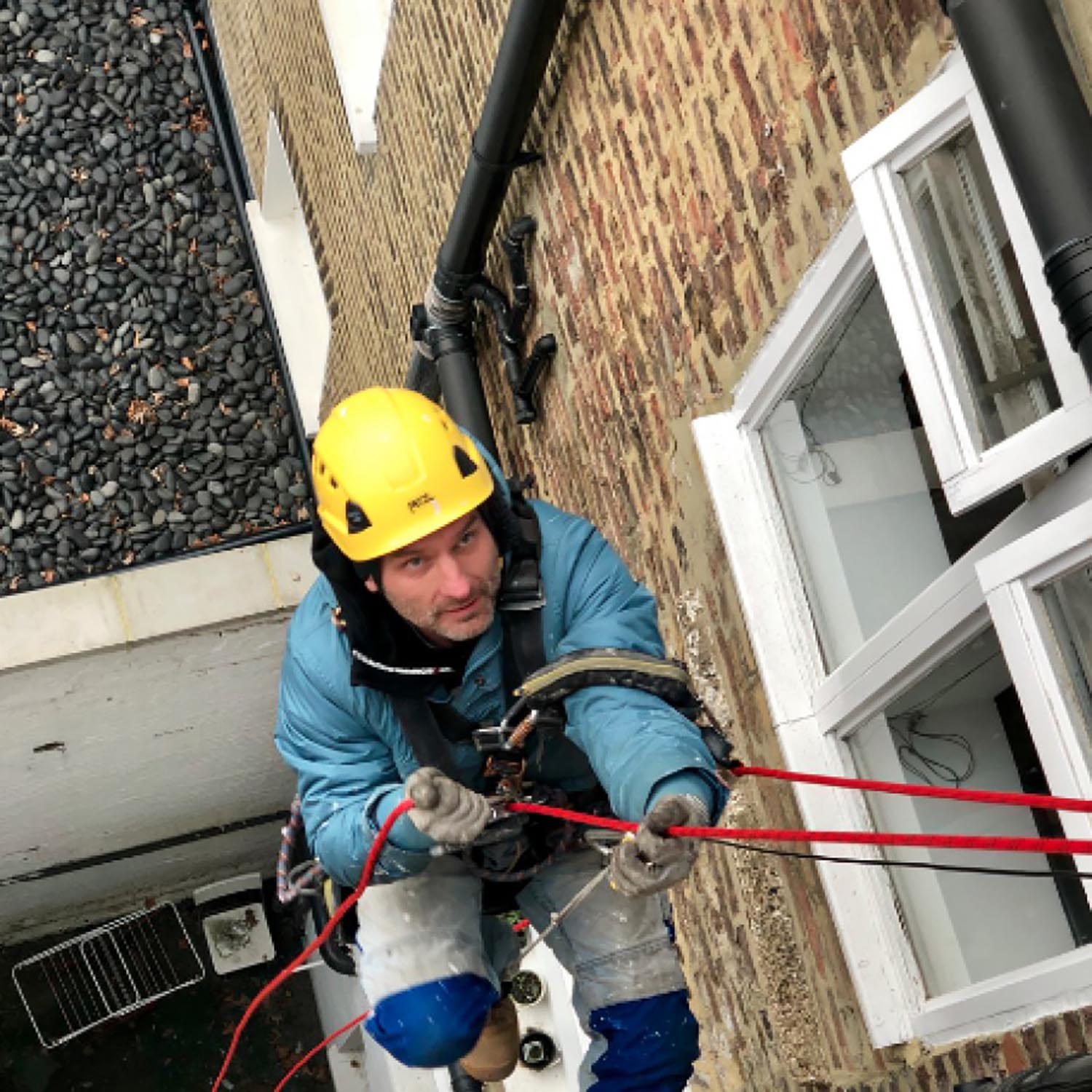
Rope access lets the same team inspect, report and repair, often in a single visit. It is quick to set up and leaves entrances and pavements open, so it causes minimal disruption to residents and businesses. It also reaches the places other methods cannot, such as light wells, atriums and the upper floors of towers. Inspections come with photographs and clear reports, so you can see exactly what was found and plan the next steps.
When something can’t wait
Storm damage, broken glass and falling debris need a fast response. Alpinus runs a 24/7 emergency call-out for urgent work at height across London.
To plan maintenance for your building, or to book an inspection, get in touch with Alpinus Rope Access or call 07709 885 252. Our rope access building maintenance page explains the service in more detail.