When a building in London needs work on its facade, windows or roofline, the first question is usually how to reach it. For decades the default answer was scaffolding. Today, for a large share of jobs, rope access is the quicker, cheaper and less disruptive way to get skilled hands to the work. This guide explains how the two compare, and when each one is the right choice.
What is rope access?
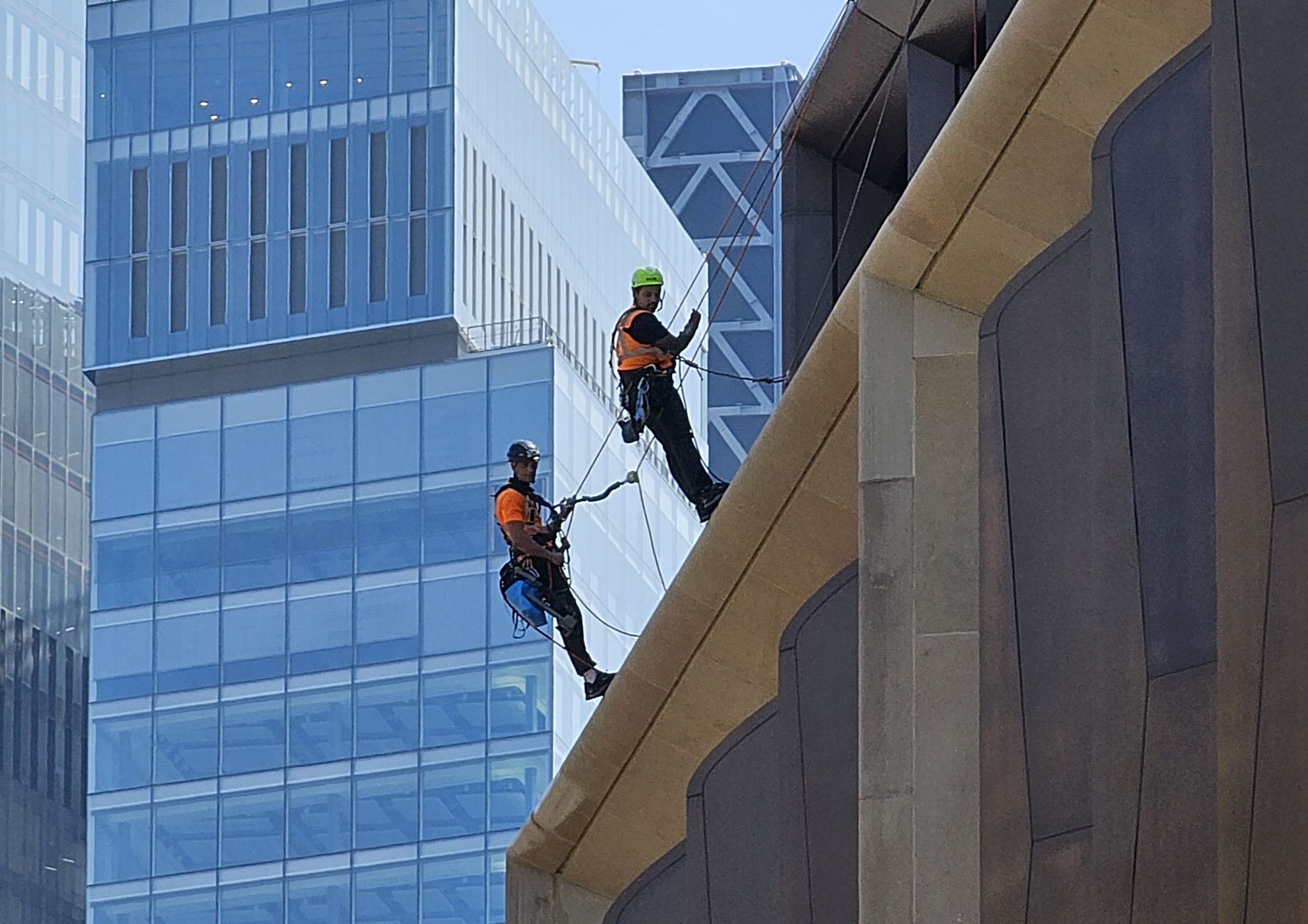
Rope access is a method of working at height in which trained technicians are suspended on two independent ropes: a working line and a separate safety line, each anchored to the structure. Technicians descend, ascend and move across a facade under their own control, and can carry the tools and materials the task needs. In the UK the method is governed by the Work at Height Regulations 2005, and most rope access firms train and work to the IRATA (Industrial Rope Access Trade Association) system.
Because the technicians themselves are the access system, rope access can be set up in minutes for a small job and in hours for a larger one. There is nothing to erect, inspect and later dismantle around the building.
Rope access vs scaffolding at a glance
- Set-up time: rope access is usually ready the same day; scaffolding can take days or weeks to design, erect and sign off on a tall building.
- Cost: with rope access you pay for the work rather than for the access. On short and medium jobs the saving on hire, erection and dismantling is often considerable.
- Disruption: rope access leaves pavements, car parks and entrances open. Scaffolding on a public footway in London normally needs a licence from the local council, and may need hoarding, lighting and pedestrian diversions.
- Building in use: with rope access the building stays fully usable, light still reaches the windows, and there is no structure outside that could give intruders a way in.
- Reach: rope access can reach places scaffolding struggles with, such as light wells, atriums, glass roofs, bridges and the upper floors of high-rise towers.
When rope access is the better choice
Rope access comes into its own whenever the work is short, targeted or spread out across a tall elevation. Typical examples include:
- glass replacement and glazing repairs on high-rise buildings, including emergency replacements;
- facade and structural inspections, where the inspector needs to see every part of the building at arm’s length;
- window and facade cleaning and high-pressure cleaning of stone, brick and cladding;
- masonry repairs, repointing and resealing joints;
- exterior painting and protective coatings;
- bird proofing in light wells and on ledges;
- urgent work after storm damage, where speed matters most.
For jobs like these, the time and money spent erecting scaffolding can easily exceed the cost of the work itself. Rope access puts the budget where it belongs: into the repair.
When scaffolding still makes sense
Scaffolding remains the right tool for some projects, and a good access contractor will tell you so. It is usually the better option when:
- a whole elevation is being rebuilt or re-clad over many months;
- many trades need to work on the same face of the building at the same time;
- large quantities of heavy materials have to be stored and handled at height;
- the work involves heavy demolition or produces large volumes of debris.
Many projects use both: scaffolding for the heavy phase, and rope access for inspections beforehand, snagging afterwards and the hard-to-reach details in between.
Is rope access as safe as scaffolding?
Done properly, yes. Every rope access technician works on two independent ropes, so a single failure cannot cause a fall. Work is planned with a method statement and risk assessment, anchors are checked before use, and a rescue plan is in place before anyone goes over the edge. Exclusion zones below the work area protect people on the ground. Our article Is rope access safe? explains the safety system in more detail.
How to decide for your building
The quickest way to choose is to describe the job to a rope access contractor and ask for a quote that includes the access. Useful details to have ready:
- the address and the height of the building;
- what needs doing, and roughly where on the facade;
- whether there is roof access and anything to anchor to, such as plant rooms, steelwork or abseil posts;
- any time constraints, such as tenants, opening hours or a deadline.
Alpinus Rope Access works across London with IRATA-trained technicians and a 24/7 emergency call-out. If you are weighing up rope access against scaffolding for your building, send us the details or call 07709 885 252, and we will tell you honestly which approach suits the job.