Seeing a technician abseil down the side of a tower block can look alarming. In reality, industrial rope access has one of the strongest safety records of any method of working at height. That record comes from a strict system of equipment, training and planning. This article explains how that system works, so building owners and managers know what to expect from a professional rope access contractor.
Two ropes, every time
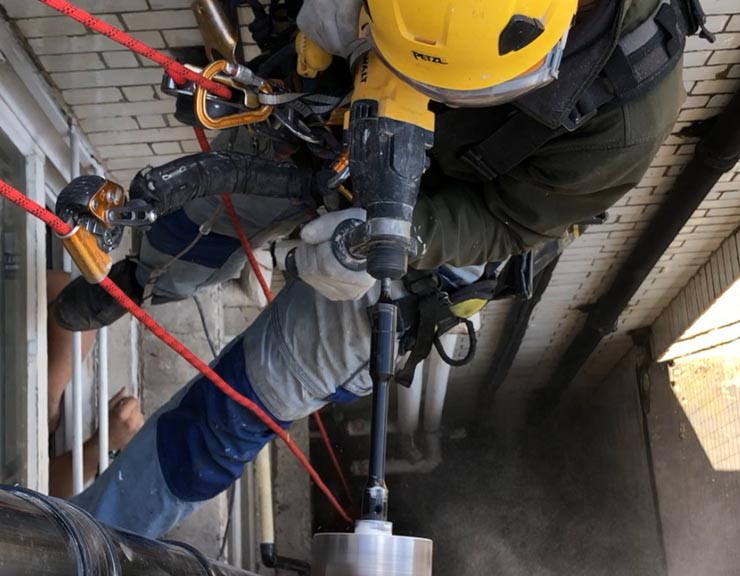
The foundation of rope access safety is the double rope system. Every technician is attached to two separate ropes, each fixed to its own anchor:
- the working line, which the technician hangs from and moves on;
- the safety line, which carries a back-up device that locks automatically if the working line or its equipment ever fails.
Because the two systems are independent, no single failure, whether of a rope, an anchor or a device, can result in a fall. Equipment is inspected before every use and recorded in a register, and anything showing wear is taken out of service.
Training and the IRATA levels
Most UK rope access work is carried out under the IRATA (Industrial Rope Access Trade Association) scheme, which trains and assesses technicians at three levels:
- Level 1 technicians carry out a defined range of rope access tasks under supervision;
- Level 2 technicians can rig more complex systems and perform rescues;
- Level 3 technicians supervise rope access work sites, plan the rigging and take responsibility for the safety of the team.
Every team should include a qualified supervisor, and every technician must be trained and practised in rescuing a colleague from the ropes. Alpinus works with IRATA-trained technicians on every project.
Planning before anyone goes over the edge
Safe rope access starts well before the ropes go out. For each project a professional contractor prepares a method statement and risk assessment covering:
- the anchor points to be used, such as structural steelwork, plant rooms or permanent abseil posts, and how they will be checked;
- how ropes will be protected where they pass over edges;
- exclusion zones and signage at ground level, so nobody walks beneath the work;
- how tools and materials will be secured so nothing can be dropped;
- weather limits, especially for wind and lightning;
- a rescue plan, with the equipment for it on site.
In the UK, all work at height must follow the Work at Height Regulations 2005 and HSE guidance. Rope access is used where the risk assessment shows it is the right method, and protective netting or other measures are added where they are needed.
Permanent anchors and abseil posts
Buildings that need regular access, for cleaning, inspections or maintenance, benefit from permanent anchor points on the roof. Properly designed and installed abseil posts give every future visit a tested, certified connection point, and make each job quicker to set up. You can see an example on our abseil posts design and installation project.
What it means for your building
For a building owner, the safety system brings practical benefits as well as peace of mind:
- the building stays open and in use, with only a small exclusion zone below the work;
- there is no scaffolding outside that could be climbed or tampered with;
- work can begin quickly, which matters most for emergency repairs at height.
Questions to ask a rope access contractor
- Are your technicians IRATA trained, and who supervises on site?
- Will you provide a method statement and risk assessment before work starts?
- Which anchor points will you use, and how will they be checked?
- What is your rescue plan?
- How will you protect people and property below the work area?
A professional contractor will answer all of these clearly. If you would like to talk through a project, from inspections and glazing to building maintenance, contact Alpinus Rope Access or call 07709 885 252.